



Social services and care
Legal help with a report of concern
Has social services received a report of concern about your child, or are you concerned about a child or an adult? We help you understand the process, prepare for contact with social services, and protect your rights.
- Response within one business day
- Experienced lawyers
- Online, wherever you are
What is a report of concern?

A report of concern is submitted to social services when someone knows or suspects that a child may be at risk of harm. Under Swedish law, proof is not required to make a report, but the person reporting the concern should describe their observations as clearly and specifically as possible.
Members of the public are encouraged to report concerns about a child. Professionals in schools, healthcare, and certain government agencies have a legal duty to report immediately if they learn or suspect that a child may be at risk in the course of their work.
A report may concern suspected:
- violence, abuse, or neglect
- substance abuse or serious mental health problems in the family
- inadequate care or an unsafe home environment
- behavior that places the child at serious risk.
A report does not automatically mean that the information is correct or that the child will be removed from the home. Social services must assess the child’s circumstances and need for protection or support.
What happens after a report of concern?
When social services receives a report about a child, it first determines whether the child needs immediate protection. Social services then decides whether to open an investigation.
Social services may contact the child, the child’s guardians, and other people who have information about the situation. If an investigation is opened, social services gathers the information needed to assess the child’s needs.
The process may result in:
- the matter being closed without an investigation
- voluntary support being offered to the family
- an investigation followed by support measures
- more extensive protective measures being considered if the child faces a serious risk.
The report itself is not an official decision and cannot be appealed. Any right to appeal depends on the decisions made later in the case.
Your rights as a parent
As a guardian, you will generally be informed about the investigation and given an opportunity to describe your and your child’s circumstances. You may provide information, respond to allegations, and submit documents relevant to the assessment.
Depending on the circumstances, you may:
- ask what the reported concerns and investigation involve
- provide your account of what happened
- request access to case documents, subject to confidentiality restrictions
- have a lawyer assist you in your contact with social services
- request an interpreter if needed.
If you believe that the report contains incorrect or misleading information, respond factually and support your account with relevant documentation whenever possible.
If you are concerned about a child
You do not need to be certain that a child is being harmed before contacting social services. The report should be submitted to social services in the municipality where the child lives and may be made verbally or in writing.
A private individual may remain anonymous by withholding their identity. A professional making a report under a legal reporting duty cannot remain anonymous.
Reporting concerns about an adult
The rules for reporting concerns about children do not apply in the same way to adults. However, you may still contact the municipality, social services, or a healthcare provider if you are concerned about an adult because of:
- mental illness
- substance abuse
- domestic violence
- an inability to meet their basic needs.
The support available depends on the person’s circumstances and whether they agree to receive help. Separate Swedish laws may apply if the legal requirements for involuntary care are met.
How we can help you
We help you understand what the report means, prepare for contact with social services, and take appropriate action based on the circumstances and your legal rights.
Legal advice
We review the situation, explain the applicable rules, and help you understand what may happen next.
Preparing for meetings
We help you prepare relevant information, questions, and documents before meetings with social services.
Written responses and documentation
We help you respond to allegations and prepare clear, factual written statements.
Legal representation
We represent you in your contact with social services and assist you if the matter develops into further legal proceedings.
Get legal help with a report of concern
Schedule a 15-minute meeting with a lawyer to review and discuss your situation.
If you need further assistance, we’ll explain your options, how we can assist you, and what it would cost. If you hire us for your case, the cost of the first 15 minutes will be deducted from your final bill.
Talk to a lawyer
15-minute legal consultation
A brief meeting for quick guidance. Get answers to your questions, understand your rights and options, and learn how to move forward.
Need more help? You can also schedule a longer meeting with a lawyer for assistance with a specific task or a more complex situation.
Concerned about the cost? In some cases, part of the cost may be covered by legal expenses insurance or legal aid. We also offer payment plans through Klarna. Learn more about costs and financing →
Get help from our lawyers
Speak with one of our lawyers if you have been informed of a report of concern, need to prepare for a meeting, or want help responding to information in an investigation.
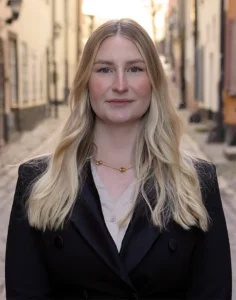
Matilda Selander Persson
Lawyer
Matilda primarily works with employment law, business law, contract law, family law, and migration law. She speaks Swedish and English.

Florita Telhaj
Lawyer
Florita specializes in migration law, business law, contract law, and employment law. In addition to Swedish and English, Florita is also fluent in Albanian and Greek.

Wazima M. Aga
Lawyer
Wazima is deeply committed to protecting individual rights and practices immigration law, administrative law, social welfare law, family law, and contract law. She speaks Swedish, English, Persian, and Dari.

Aja Wadii
Lawyer
Aja specializes in migration law, family law, and criminal law. In addition to Swedish and English, Aja also speaks Arabic.

Nadja Hatem
Lawyer
Nadja works within family law – mainly custody disputes and international child abduction cases. She has also worked in criminal law. She speaks Swedish, English, and Arabic.

Anuta Sjunghamn
Lawyer
Anuta works in migration law – primarily handling asylum cases. She also assists with family law disputes and criminal cases. Anuta speaks Swedish, English and Persian.

Aleksandar Milic
Consulting lawyer
Aleksandar Milic specializes in business law and family law and also serves as legal counsel in LVU cases. He speaks Swedish, Serbian, Croatian, and Bosnian.

Mirella Nunes Siqueira
Consulting lawyer
Mirella specializes in business law, financial family law, employment law, and consumer law. She speaks Swedish, English, Portuguese, and Spanish.
FAQ
Frequently asked questions about concern reports
A private individual may remain anonymous by not disclosing their identity to social services. A professional reporting concerns as part of a legal reporting duty cannot remain anonymous.
Social services first assesses whether the child needs immediate protection and then decides whether to open an investigation. A report does not automatically lead to an investigation or removal from the home.
You will generally have an opportunity to provide your account and submit relevant information. You may also be entitled to review case documents, subject to confidentiality restrictions, and have a lawyer assist you.
The report itself cannot be appealed because it is not an official decision. Certain decisions made later in the process may be subject to appeal.
Let a lawyer contact you
Tell us briefly about your situation, and we’ll get back to you within one business day to schedule a video consultation.