


Inheritance, gifts and estate planning
Estate distribution in Sweden
Before a deceased person’s estate can be closed, its assets generally need to be distributed among the parties to the estate. Our lawyers can determine the relevant inheritance shares, address disagreements and prepare a clear estate distribution document.
- Response within one business day
- Experienced lawyers
- Online, wherever you are
What is an estate distribution?

An estate distribution is the final allocation of an estate’s assets among the heirs and other parties to the estate. The allocation is based on Swedish inheritance law, any valid will and the agreement reached by the parties.
The estate inventory records the assets and liabilities that existed on the date of death. The estate distribution determines who receives the money, securities, real property and other assets belonging to the estate.
If there is only one party to the estate, a separate estate distribution document is normally unnecessary. The assets generally pass to that person once the estate inventory has been registered.
What must be completed before the estate is distributed?
The estate inventory will normally need to be registered before the distribution takes place. Known debts must be paid, or sufficient funds must be reserved for them. The parties must also establish who is entitled to participate and whether a will affects the distribution.
If the deceased was married, a division of matrimonial property may need to take place before the estate is distributed. Assets may also need to be valued so that the parties can agree on the allocation and calculate any equalization payments.
The estate distribution document
Once the parties have agreed, the allocation is recorded in a written estate distribution document. It should clearly identify the parties, the assets covered by the distribution, the values used and the assets allocated to each recipient.
All parties to the estate must sign the document. It is not filed with the Swedish Tax Agency, but banks, the Swedish mapping and land registration authority and other organizations may require it before transferring assets to their new owners.
If the parties cannot agree
Disagreements may concern the value of an asset, the interpretation of a will or who should receive particular property. Legal assistance can clarify the parties’ rights and help them negotiate a workable solution.
If no agreement can be reached, a party to the estate may apply to the district court for the appointment of an estate distribution executor. The executor will first try to obtain an agreement and may then impose a compulsory distribution. A party wishing to challenge that distribution must bring court proceedings within four weeks of being served with it.
How we can help you
We tailor our assistance to the estate’s assets, the number of parties involved and any issues that must be resolved before the distribution.
Determining inheritance shares
We review the estate inventory, any will and other relevant documents to identify the parties to the estate and determine their respective rights.
Preparing an allocation proposal
We help value and allocate the estate’s assets and calculate any equalization payments between the parties.
Drafting the distribution document
We prepare or review an estate distribution document that clearly records the agreed allocation.
Negotiations and disputes
We assist when the parties disagree and can represent an individual party in matters involving an estate distribution executor or a challenge to a compulsory distribution.
Complete the estate distribution with clear documentation
Schedule a 15-minute meeting with a lawyer to review and discuss your situation.
If you need further assistance, we’ll explain your options, how we can assist you, and what it would cost. If you hire us for your case, the cost of the first 15 minutes will be deducted from your final bill.
Talk to a lawyer
15-minute legal consultation
A brief meeting for quick guidance. Get answers to your questions, understand your rights and options, and learn how to move forward.
Need more help? You can also schedule a longer meeting with a lawyer for assistance with a specific task or a more complex situation.
Concerned about the cost? In some cases, part of the cost may be covered by legal expenses insurance or legal aid. We also offer payment plans through Klarna. Learn more about costs and financing →
Get help from our lawyers
Our lawyers explain the Swedish inheritance rules, prepare a workable allocation and document the distribution clearly. We can assist all parties when they agree or represent one party when a dispute has arisen.

Matilda Selander Persson
Lawyer
Matilda primarily works with employment law, business law, contract law, family law, and migration law. She speaks Swedish and English.
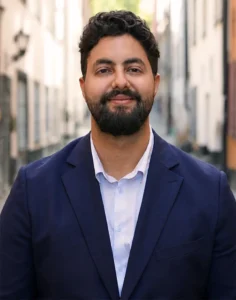
Farid Laghrissi
Lawyer
Farid assists individuals and businesses with employment law, tenancy law, financial family law, contracts, disputes, and other business and corporate law matters. Farid speaks Swedish, English, Arabic, Darija, and French.

Wazima M. Aga
Lawyer
Wazima is deeply committed to protecting individual rights and practices immigration law, administrative law, social welfare law, family law, and contract law. She speaks Swedish, English, Persian, and Dari.

Aja Wadii
Lawyer
Aja specializes in migration law, family law, and criminal law. In addition to Swedish and English, Aja also speaks Arabic.

Nadja Hatem
Lawyer
Nadja works within family law – mainly custody disputes and international child abduction cases. She has also worked in criminal law. She speaks Swedish, English, and Arabic.

Anuta Sjunghamn
Lawyer
Anuta works in migration law – primarily handling asylum cases. She also assists with family law disputes and criminal cases. Anuta speaks Swedish, English and Persian.

Mirella Nunes Siqueira
Consulting lawyer
Mirella specializes in business law, financial family law, employment law, and consumer law. She speaks Swedish, English, Portuguese, and Spanish.

Aleksandar Milic
Consulting lawyer
Aleksandar Milic specializes in business law and family law and also serves as legal counsel in LVU cases. He speaks Swedish, Serbian, Croatian, and Bosnian.
FAQ
Frequently asked questions about distribution of an estate
If there are several parties to the estate and assets need to be allocated between them, a formal distribution will normally be required. A separate distribution document is usually unnecessary if there is only one party to the estate.
Yes. The parties may prepare the distribution document themselves if everyone agrees. Before signing, they should ensure that all parties, debts, inheritance shares and assets have been dealt with correctly.
No. The document is not submitted to the Swedish Tax Agency. It may, however, need to be presented to banks, land registration authorities and other organizations transferring the estate’s assets.
The cost depends on the estate’s size and complexity, the types of assets involved and whether the parties agree. A straightforward distribution will generally require less work than a matter involving extensive valuations, negotiations or court proceedings.
Let a lawyer contact you
Tell us briefly about your situation, and we’ll get back to you within one business day to schedule a video consultation.